Alex Berger · 24 September 2026
The Hidden Mechanics of Wheel Material Selection in High-Traffic Delivery Fleets
Fleet operators face constant pressure to balance durability, cost efficiency, and performance when choosing wheel materials for vehicles that log thousands of miles each week. High-traffic delivery fleets operate in environments filled with potholes, curb impacts, varying temperatures, and heavy loads, so material selection directly influences maintenance schedules, fuel consumption, and vehicle uptime. Research from fleet management databases shows that wheel failures account for a measurable portion of unplanned downtime, which pushes managers to examine the underlying properties of rubber compounds, polyurethane, aluminum alloys, and composite constructions rather than relying on surface-level specifications alone.Core Material Categories and Their Structural Behaviors
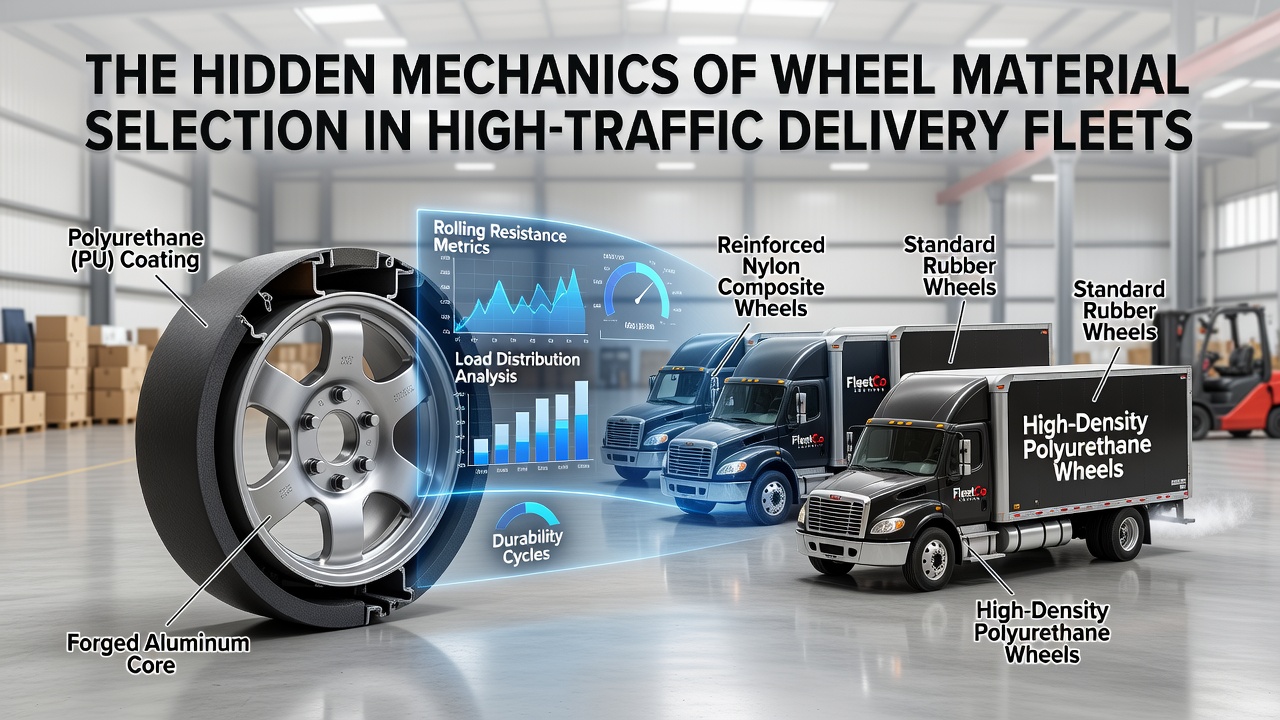
Standard pneumatic rubber wheels remain common in many delivery operations because they absorb shocks effectively while maintaining reasonable rolling resistance under typical load ranges. Yet fleet data reveals that natural rubber blends degrade faster under constant exposure to UV radiation and ozone, whereas synthetic compounds incorporating styrene-butadiene rubber extend service life by resisting cracking in high-mileage applications. Polyurethane wheels, molded as solid or semi-pneumatic units, deliver higher load-bearing capacity and eliminate flat-tire incidents, though their higher coefficient of friction can increase energy demands on electric delivery vans during stop-and-go routes.
Aluminum alloy wheels reduce unsprung weight compared with steel equivalents, which improves handling response and contributes to lower overall vehicle mass in weight-sensitive fleets. Observers note that these alloys require protective coatings to prevent corrosion when road salts accumulate during winter operations, and the material choice becomes especially relevant in regions where temperature swings exceed 40 degrees Celsius between day and night cycles. Composite wheels that combine carbon fiber or glass-reinforced polymers with metal hubs appear in select pilot programs, where engineers track fatigue resistance over multi-year cycles to determine whether initial production costs offset long-term replacement savings.
Operational Factors Driving Selection Decisions
Load distribution patterns matter more than average weight ratings because delivery routes often include concentrated cargo shifts during loading and unloading sequences. Materials that handle peak loads without permanent deformation reduce the frequency of wheel truing or replacement, while those exhibiting creep under sustained pressure lead to alignment issues that accelerate tire wear on adjacent components. Temperature stability also plays a role, since rubber compounds lose elasticity below certain thresholds, creating vibration that transmits through the chassis and affects driver fatigue metrics recorded in telematics systems.
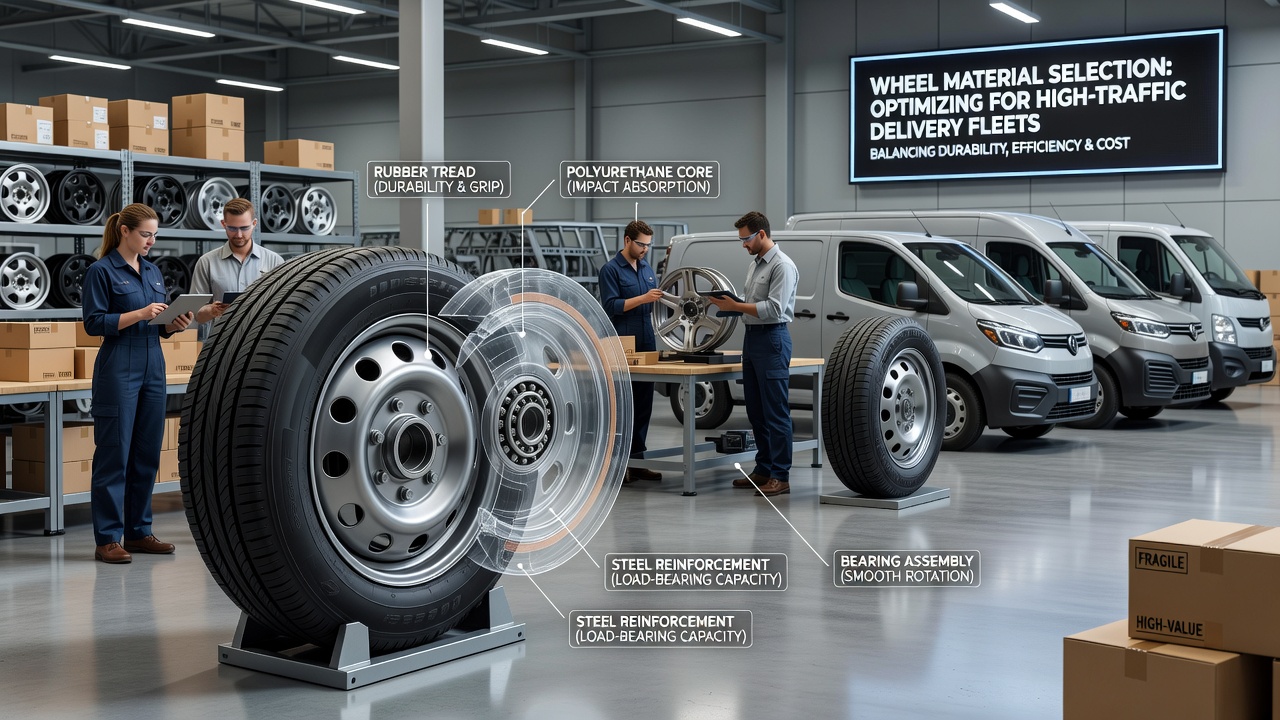
Rolling resistance coefficients documented in independent laboratory tests influence energy consumption figures, particularly as fleets transition toward battery-electric platforms where every watt-hour counts toward range targets. Fleet managers cross-reference these coefficients against real-world route profiles that include frequent starts, inclines, and curb strikes rather than relying solely on manufacturer-published figures. Abrasion resistance becomes critical on routes that traverse construction zones or industrial parks where debris accumulates, prompting some operators to rotate wheel sets between high-wear and standard routes to equalize service intervals across the entire vehicle population.
Data Patterns Emerging in 2026 Fleet Records
September 2026 maintenance logs from several North American and European operators indicate measurable differences in wheel longevity when material selections align with specific route characteristics rather than defaulting to a single specification across mixed fleets. European Commission transport statistics highlight that polyurethane-equipped vehicles in dense urban corridors recorded fewer wheel-related service events compared with rubber-equipped counterparts during the same monitoring period. Meanwhile, reports compiled by the US Department of Transportation emphasize correlations between wheel material weight and overall payload efficiency in last-mile delivery segments where every kilogram saved translates into additional package capacity per shift.
Academic studies from transport engineering departments continue to examine how surface treatments applied during manufacturing alter long-term friction and wear profiles under accelerated testing protocols that simulate years of delivery cycles in weeks. These investigations reveal that surface hardness interacts with road surface textures in ways that simple durometer readings fail to predict, leading some fleet teams to conduct controlled field trials before committing to large-scale material changes.
Maintenance Integration and Lifecycle Tracking
Wheel material choice connects directly to broader maintenance frameworks because certain compounds accept retreading or resurfacing more readily than others, extending usable life without full replacement. Tracking systems that log wheel position, mileage, and observed wear patterns allow operators to identify whether a given material performs consistently across seasonal variations or requires route-specific adjustments. Those who have studied fleet operations note that standardized inspection protocols become more effective when technicians understand the failure modes typical of each material, such as delamination in composites versus chunking in overloaded polyurethane wheels.
Conclusion
Material selection for high-traffic delivery fleet wheels rests on measurable interactions between load profiles, environmental exposure, energy requirements, and maintenance logistics rather than isolated property comparisons. Operators who integrate laboratory data with route-specific performance records achieve more predictable service intervals and lower total ownership costs over multi-year vehicle lifecycles. Continued monitoring through 2026 and beyond will refine these relationships as new compounds and manufacturing techniques enter commercial availability.